Purpose
The Group exists to reduce unwarranted variation in mental health services, so that where a person lives no longer determines the quality, timeliness or safety of the care they receive.
The Mental Health Act 2025, the Health Bill 2026–27 and devolution and place-based decision-making are the principal mechanisms through which more consistent services can be delivered.
These are means to this outcome, not ends in themselves, and not the only routes available. The Group keeps the outcome fixed and stays open-minded about which mechanisms best achieve it.
In support of that outcome, the Group will:
1. Drive consistent service delivery Support organisations across the NHS, independent sector, local government and voluntary sector to use the Mental Health Act 2025 as a driver of more consistent service delivery, not as compliance activity.
2. Connect legislative and NHS reform Connect Mental Health Act 2025 implementation, the Health Bill 2026–27 and the NHS 10 Year Health Plan so that reform reduces variation as one coherent package rather than parallel initiatives.
3. Keep mental health prioritised Ensure mental health remains prioritised and visible as functions move from NHS England into the Department of Health and Social Care, integrated care boards and devolved and mayoral structures, with consistency of provision as the test.
4. Advocate for resources and support Advocate to government and Parliament for the resources and practical support needed to close variation before statutory provisions switch on.
Objectives
Establish a shared, evidence-based picture of where unwarranted variation exists in access, assessment and care, and why.
Identify good practice, the conditions that let it spread at pace, and the barriers that prevent wider adoption.
Test how the Mental Health Act 2025, the Health Bill 2026-27, integrated care board reform and devolution can be used to reduce variation in commissioning, financial flows and pathway design.
Gather intelligence from participating leaders on readiness, workforce, digital maturity and cost, and feed it back to government and Parliament in anonymised form.
Protect patient voice, lived experience, safeguarding and safety learning as national scrutiny structures change.
Rebuild the cross-system community of practice that has weakened since the 2018 Independent Review.
Membership
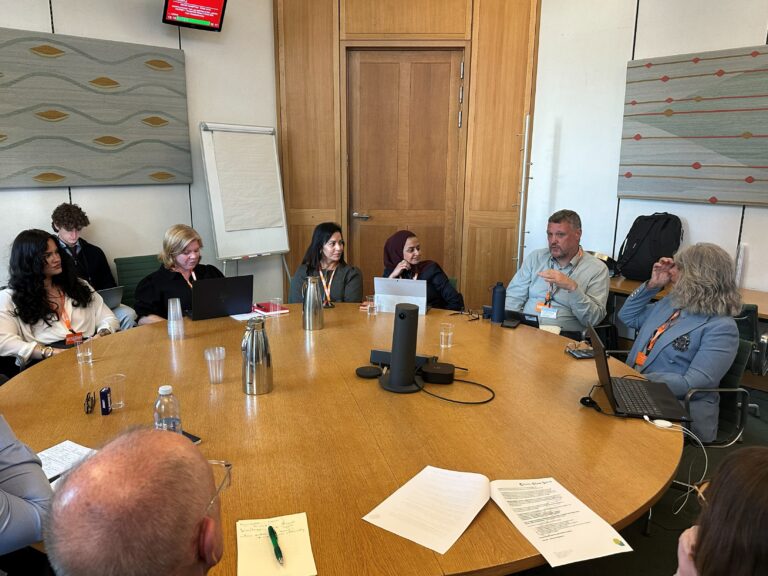
– The Group is small, senior and delivery-focused. Participants are responsible for implementation, not observers.
– Core membership: NHS mental health trust leaders (clinical, operational, digital); integrated care system representatives; national policymakers and advisers; primary care, community and social care leaders; local government and voluntary sector partners; lived experience and carer representatives; patient safety expertise; and data, digital and single patient record leads.
– Founding members: Cygnet, Psyomics and Thalamos participate on exactly the same transparent, procurement-neutral basis as every other member, under the participation clause below.
Participation clause
Participation in the Group is voluntary and confers no commercial advantage, preferential procurement access, endorsement or entitlement of any kind.
Founding and commercial members take part on exactly the same transparent basis as every other member.
All interests are recorded on a public register.
Where a member has a material interest in a matter, that member takes no part in the related discussion or recommendation.
The Group operates in the public interest, and its independence is safeguarded by the Chair or Vice/Deputy Chair.
Interested in Participating?
Get involved with UKHLSI and help shape the future of UK health and life sciences.
Contact Us →enquiries@ukhlsi.co.uk