
Budget 2026 brings targeted NHS funding, investment in technology and life sciences, and a longer-term commitment to social care reform. Curia’s latest member briefing examines what these announcements mean for UKHLSI members and where further detail will be needed to turn commitments into improvements for patients.
The Budget creates opportunities for healthcare innovators, researchers and providers to contribute to delivery. Understanding the funding, implementation arrangements and evidence requirements will help members identify where their expertise can make the greatest contribution.
Reflecting on the Budget, Chief Executive of UK Healthcare and Life Sciences Innovation (UKHLSI), Joanne Bekis said:
“The 2026 Budget delivers a positive and encouraging vision for the UK’s innovation economy, recognising the critical role that SMEs, entrepreneurs and high-growth businesses play in driving productivity, exports and economic growth. We particularly welcome the measures designed to strengthen opportunities for women in business and technology.
“The introduction of the Women in Tech Taskforce’s ‘Tech Forward’ and ‘Inclusive Investment’ standards represents an important commitment to creating more inclusive workplaces, improving access to investment and helping more women build successful careers and businesses in the technology sector. Coupled with the new scale-up programme for women-led businesses, which aims to address barriers to fundraising and investment, this demonstrates a genuine ambition to support female founders as they start, grow and scale innovative enterprises.
“Alongside economic growth measures, UKHLSI welcome the £100 million investment in robotic-assisted surgery through the NHS Transformation Fund. This commitment will help accelerate the adoption of transformative technologies, improve patient outcomes and support a more productive and sustainable healthcare system. Finally, the focus on socio-economic and regional representation within financial services is a positive step towards ensuring talent can thrive regardless of background or geography.
“Creating fairer pathways into leadership and investment communities will be essential to unlocking the full potential of the UK’s diverse workforce. Taken together, these measures demonstrate a commitment to innovation, inclusion and economic growth. They create new opportunities for SMEs, female entrepreneurs, technology businesses and healthcare innovators, helping to build a more competitive and prosperous UK.”
NHS funding and surgical innovation
The Budget provides an additional £190 million for NHS England in 2026–27 to help manage winter and wider pressures. It also commits £100 million to accelerate the adoption of robotic surgery, supporting an ambition to increase annual procedures from 70,000 to 500,000 by 2035.
For members, this presents potential opportunities across equipment, clinical training, maintenance and evaluation. Successful expansion will depend on workforce readiness and theatre capacity alongside technology. The briefing considers how organisations can demonstrate improvements in patient outcomes, service capacity and the overall cost of care.
AI and NHS productivity
An independent review led by Mark Bailie will examine NHS productivity and the opportunities presented by AI, reporting in early 2027. The Budget also announces a £15 million AI Challenge Prize programme, beginning with healthcare.
These measures create an opportunity to show how innovation can support staff and improve services. Members developing digital solutions should prepare evidence covering clinical assurance, interoperability, implementation costs and measurable benefits. The briefing explores why adoption and integration will matter as much as technical capability.
Medicines access and life sciences investment
Zero-rate VAT treatment for qualifying donated medicines offers targeted support for early and expanded access programmes. Members operating these programmes will need to examine eligibility and practical implementation.
The Budget also announces more than £1 billion in public-private life sciences investments, backed by almost £70 million in grants. These include Convatec’s planned global research and development hub in Manchester, a new Vertex Pharmaceuticals facility in Oxford and Kindeva’s investment in Loughborough.
For the wider membership, these commitments could support research partnerships, supply-chain relationships and regional skills development. The briefing also considers the relevance of broader measures supporting innovative businesses.
Social care and biosecurity
The Government’s commitment to a National Care Service in England, including free personal care for older people, establishes a direction for longer-term reform. Baroness Casey’s commission will report in 2027, with changes to the pension Triple Lock from April 2030 intended to help fund the settlement.
Separately, a £165 million AI biosecurity initiative creates potential opportunities for organisations working in diagnostics, biological data and medical countermeasures.

What members should consider next
Curia’s briefing distinguishes immediate measures from commitments requiring further policy development. It identifies priorities for member engagement, including preparing evidence of patient benefit, monitoring procurement arrangements and contributing practical proposals to forthcoming reviews.
Read the full member briefing to understand the announcements, assess their implications for your organisation and identify the decisions to watch as implementation develops.

Find out more about UK Healthcare and Life Sciences Innovation (UKHSLI)
To receive regular briefings from UKHLSI, and other member services, please contact enquiries@ukhlsi.co.uk to find out more.
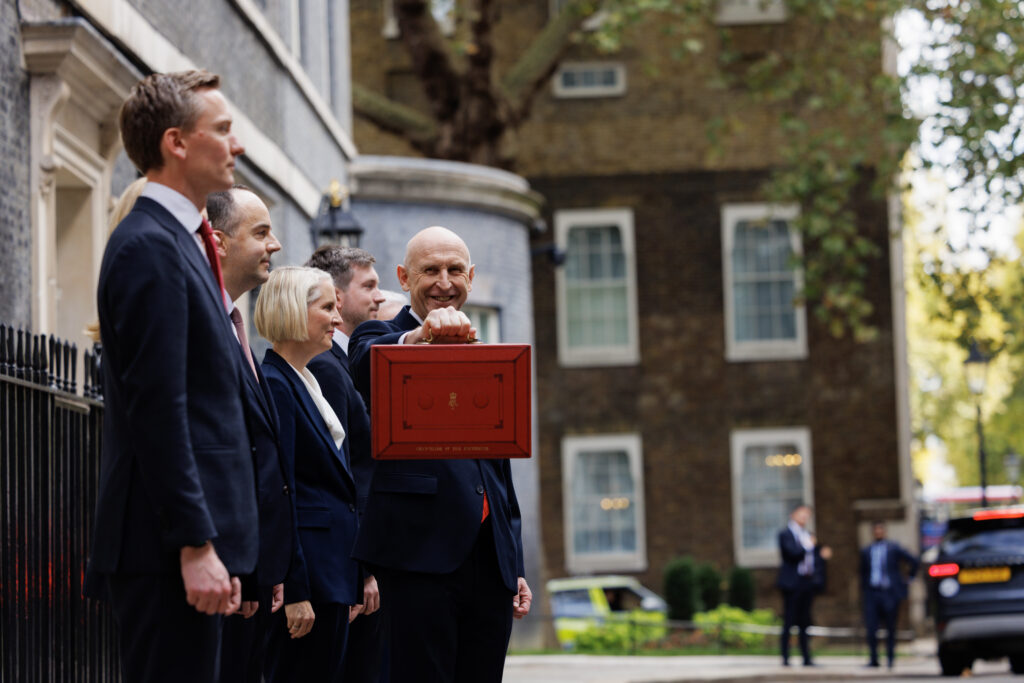
(Picture: Alecsandra Dragoi/HM Treasury)